Emma: Does Everybody Have Their Level?
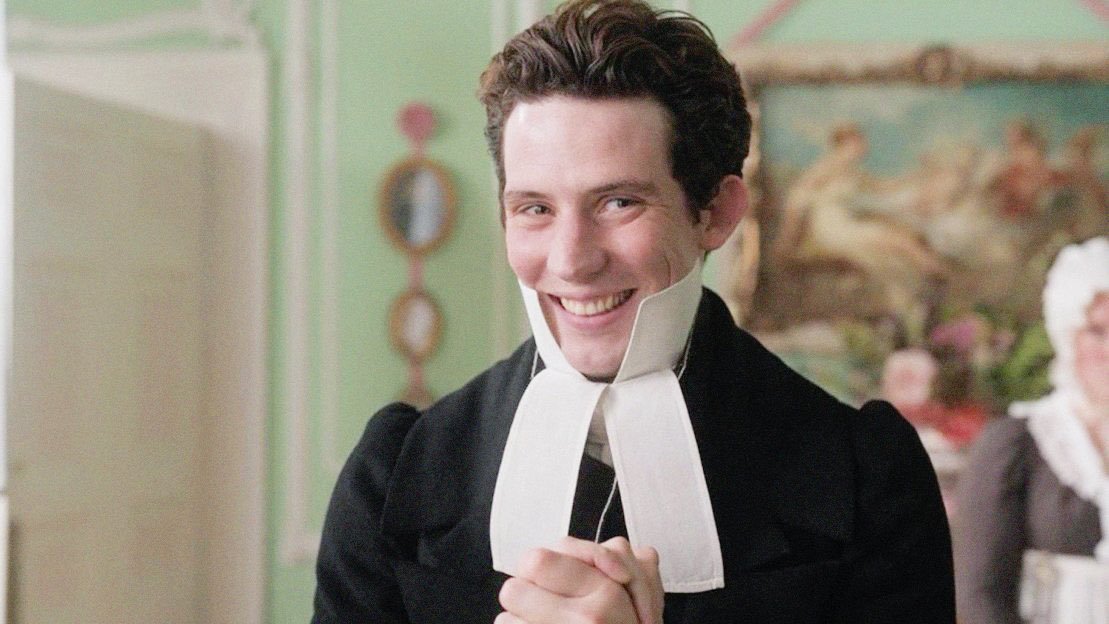
Mr. Elton may be a comic villain of sorts in Jane Austen’s Emma, but he does give us a great question for our classroom:
True or False? “Everyone has their level.”
(Sometimes I find couching difficult questions into the strict binary of True-or-False helpful in trying to evoke a response out of my students on a lethargic Monday morning).
Mr. Elton makes the claim that “everyone has their level” in his humiliation scene, when he is riding home from Randalls in a carriage with Emma alone and avails himself of the opportunity to profess his love for the Queen of Highbury.
The scene is, of course, hilarious—especially in the 2020 Autumn de Wilde film starring Anya Taylor Joy as Emma. Watching Emma slowly realize that she has been—as the modern version of Austen’s book has it—”clueless” about Mr. Elton’s real intentions while poor Mr. Elton puts himself out there—also clueless—that Emma has no interest in him is a true joy. Students roar with laughter at the scene.
At the start of the scene, Mr. Elton is (rather “creepily” as my students put it) trying to be romantic and sensitive, but once he realizes that Emma is decidedly not pursuing matrimony with him, he gets colder and serious. When Emma claims that she was wishing Mr. Elton great success with his pursuit of Harriet, he sputters in response:
“Miss Smith is a very good sort of girl . . . I wish her extremely well: and, no doubt, there are men who might not object to—Everybody has their level.”
Mr. Elton, as Mr. Knightley has made very clear to Emma in prior scenes, is the sort of man who knows he is handsome and is hoping to marry “up”—that is, for money and prestige. Harriet is definitely not marrying up. She is the unacknowledged daughter of “somebody” and is known as a sweet, pretty “parlor boarder” at Mrs. Goddard’s school. She’s a charity case with an unknown parentage; she’s (paraphrasing Tom Buchanan in The Great Gatsby) “Miss Nobody from Nowhere.”
Mr. Elton’s class snobbery is off-putting to us as viewers and readers because we already like Harriet. She’s simple, sweet, and lovely and—like anyone else—deserves to find love. Emma has manipulated poor Harriet to “love” Mr. Elton, so we see her as victim of Emma’s machinations rather than just a simpleton.
So Mr. Elton’s put-down of Harriet (and “lift-up” of himself) is noxious—but is it any more noxious than Emma’s class snobbery, or—quelle horror!—Mr. Knightley’s? After all, when Mr. Knightley learned that Emma had convinced Harriet to “refuse” the marriage proposal from the charming farmer Mr. Robert Martin, Mr. Knightley could hardly restrain himself from fighting with Emma over the ridiculousness of Miss Smith rejecting someone who is—in every way—on her level. Our saintly Mr. Knightley apparently believes in “levels” too. And we know Emma does. She makes that clear on every single page of the book.
When the sentiment of levels comes out of a “villain” like Mr. Elton, we are repulsed, but somehow class enforcement is perfectly acceptable from our pretty, likable characters.
Raising this issue is great fun in the classroom. In my experience, students tend to immediately join in with most readers in panning Mr. Elton for being a cad, but upon reflection, they start thinking about bigger questions like “What does it mean for someone to be ‘on your level’?” We are sliding from the world of Jane Austen into our own—which is exactly what I want discussion to do.
Once my students are pondering whether or not we—in the 21st century—have “levels” when we are considering a romantic partner, then the English classroom is truly cooking. And as the kids say, “let it cook.”