Austen: 4 Foils of Emma in Austen’s Novel

I’m not sure if he coined the epithet or not, but Harold Bloom is the critic I associate with naming Jane Austen “Shakespeare’s Daughter.”
Being a dedicated Shakespeare fan, I find his nickname to be “high praise” indeed. Bloom could have been referring to many different qualities of Austen’s genius, but I’m going to focus on one she definitely has in common with Shakespeare (and many other authors, of course): the use of character foils.
Jane Austen’s Emma is filled with delightful and various women, all of them orbiting around the main character Emma.
Emma is characterized by Austen (with delightful economy) in the first line of the first chapter of the book: Emma is described as “handsome, clever, and rich.” She is your quintessential privileged twenty-year-old young lady.
Once we’ve been introduced to Emma, Austen then skillfully brings in other characters who—as foils always do—”set off” their different qualities.

Mia Goth as Miss Harriet Smith in the 2020 film
The first foil of Emma to be introduced is Harriet Smith—whom I call “Wannabe Emma.” Harriet is attractive (“handsome”) like Emma, but not clever and certainly not rich like her. Harriet has insecurities about “this misfortune of her birth”—since she is an unacknowledged child of “Somebody”—and worships the ground Emma walks upon. Her desire to please and emulate Emma, of course, leads into all kinds of trouble (all called out by Mr. Knightley in advance when he expresses displeasure at their close friendship to Mrs. Weston).
The next foil of Emma is Miss Bates—whom I call “Opposite” or “Bizarro Emma” because she is the opposite of Emma in every way. Miss Bates is neither attractive (we assume), nor clever, nor rich. Emma can be quite cruel about Miss Bates, telling Harriet that although both Emma and Miss Bates are unmarried, that Emma is not shameful in that common identity because she “isn’t poor.” To Emma, Miss Bates’ poverty makes her the proper subject of mockery of schoolboys.
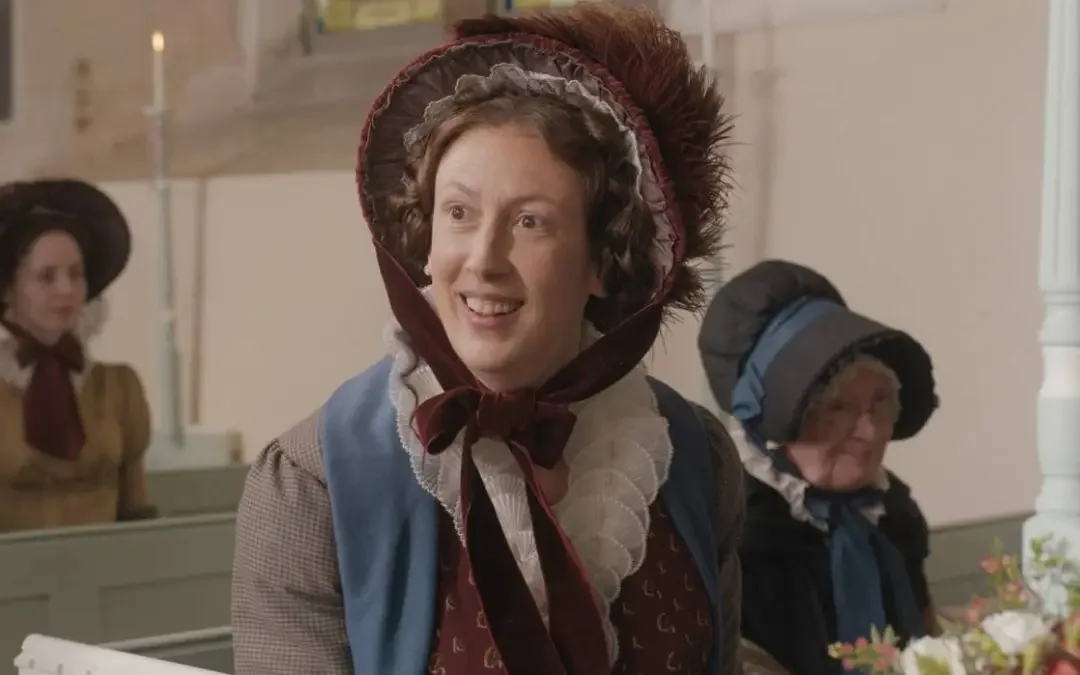
Miranda Hart as Miss Bates

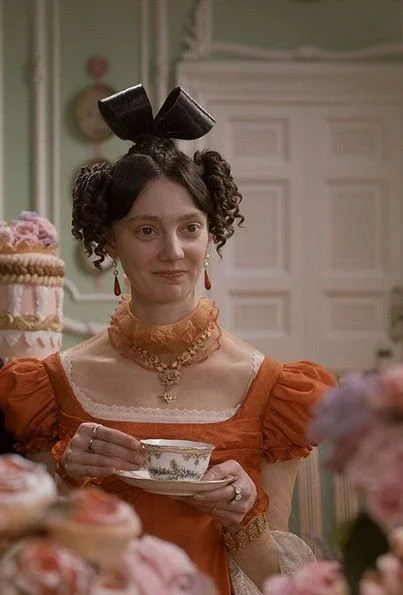
Amber Anderson as Miss Jane Fairfax
The third foil of Emma is the detested (by Emma) Miss Jane Fairfax—whom I call “Almost-Emma.” Whereas neither Harriet nor Miss Bates are “threats” to Emma’s social status in any way due to their varying deficiencies, Jane Fairfax decidedly is a threat. Just like Emma, Jane is attractive and “clever.” In fact, Jane may be considered “more” clever than Emma because she has a better education than Emma and—in the language of the novel—is more “cultured” or refined than Emma, having been raised abroad by the Campbell family. What Jane lacks, of course, is money; she is not rich and destined (unless she marries well) to become that most horrible fate in all Austen: becoming a governess (or teacher). Ha. Because Jane is so much like Emma in every way, it is easy to understand why Emma dislikes her so.
Tanya Reynolds as Mrs. Augusta Elton
The fourth and final foil of Emma is the wonderfully repulsive Mrs. Elton—whom I call “Dark Emma.” Mrs. Elton is similar to Jane Fairfax in that she is somewhat attractive, somewhat educated, and somewhat rich. In fact, she might be “closer” to Emma than Jane is. The “problem” with Mrs. Elton’s Emma-like qualities, though, is that they are all degraded from Emma’s status.
Yes, Mrs. Elton is attractive, but—it appears—no one other than Jane is as beautiful as Emma. Yes, Mrs. Elton has been educated outside of Highbury, but her education is “vulgar” to Emma. Yes, Mrs. Elton has some money, but not nearly as much as Emma does.
Mostly, I like to call Mrs. Elton “Dark Emma” because she re-enacts Emma’s plot from Volume 1 (which I call “Adventures with Mr. Elton”). In Volume 1, Emma “adopts” Harriet and tries to improve her life, and in Volume 2, Mrs. Elton “adopts” Jane Fairfax and tries to improve hers. Emma, of course, in her hilarious hypocritical and proud way, strongly disapproves of Mrs. Elton’s behaviors and quite excuses her own.
Character foils get any story crackling, and once students learn how to identify them, they see them everywhere: in movies, in Netflix shows, or in any drama or sitcom. Foils are extremely useful for kicking any plot in motion since, as George Saunders taught me, “in character is latent plot.” Character foils bring out that plot almost instantaneously.