Why does Laertes Stop Wanting to Kill Hamlet in Act 5?
Introduction:
In a play filled with great moments, my favorite will always be in Act 5.2 when Hamlet and Laertes have both received their fatal wounds, and Laertes asks Hamlet to forgive him.
Correction: Laertes asks Hamlet to “exchange” forgiveness with him because both have done each other grievous wrongs.
Laertes’ lines are perfection:
Exchange forgiveness with me, noble Hamlet.
Mine and my father’s death come not upon thee,
Nor thine on me. (dies)
This sad, doomed young man’s last words are words of mercy and forgiveness for his own death and, even more incredibly, for his father’s murder.[1]
How does Laertes get to this noble, heart-breaking place from the murderous, treacherous feelings he’d been carrying ever since his enraged return to Denmark in Act 4.5? This dynamic change occurs in such a short time as to almost be incredible.
What Do We Know about Laertes in Act 1?
Well, we don’t get a lot about him, honestly. We know that Laertes is roughly Hamlet’s age (which I always describe as a “college kid” even though we learn Hamlet is about thirty-years old if comic gravediggers can be trusted). We know that while Hamlet goes to rational, religious, philosophic Wittenburg, Germany for his higher education, Laertes goes to Paris for his studies.
Is Laertes a playboy, less intellectually serious that Hamlet? Maybe. Ophelia warns him not to be a hypocrite and preach chastity to her while he himself “the primrose path of dalliance treads / And recks not his own rede” (1.3). (She’s gotta have some reason for saying that). And later, Polonius tells Reynaldo (the Dane he has sent to follow Laertes to France and spy upon him) that he can feel free to slander Laertes by suggesting that Laertes likes to go “drabbing” (visiting brothels): “You may go so far.”
Productions that want us to truly grieve over Laertes’ later losses make a point of showing us that Laertes is a protective, possibly over-bearing older brother, very concerned about his sister’s honor and safety (not only for family pride, patriarchal reasons, but also because he genuinely doesn’t want his sister’s heart broken). The best productions show a teasing, but affectionate relationship between the two siblings.
We know that Laertes also has a generally good relationship with his loving, yet controlling—even micro-managing—father. Polonius, in one of the many famous speeches in the play, gives Laertes a heartfelt list of advice. Some productions play this advice comically—Polonius seems like a scatter-brained blowhard—while others make it tender and solicitous. It’s up to the actor playing Laertes to choose how he responds to this sometimes tedious speech that is undoubtedly well-meaning.
So, Laertes—a loving brother and son—who seems in a hurry to get back to Paris after Claudius’ coronation. That’s really all we see of Laertes in Act 1, leading critic William Kerrigan to describe Laertes simply as a “generic young man.”
Laertes’ Return
This genial, generic young man, though, returns in Act 4.5 filled with rage and grief. Laertes might be the most perfect foil in all of English literature[2]. His life seems to run parallel with Hamlet; both are the same age, and both are away at college when they learn of their fathers’ deaths.
But whereas Hamlet is told that his father died from an unfortunate accident (a snakebite while sleeping in his garden), Laertes is told that Prince Hamlet, heir to the throne, stabbed his father in the queen’s closet or bed-chamber.
Was Hamlet punished? No. He was simply sent away to England. To quote Horatio later in the play, “What kind of king is this?” What kind of king can’t keep his mad young stepson-nephew restrained and can’t protect his own wife and the country’s queen when her bedchamber is the site of violence? What kind of King can’t enforce justice, law and order, upon criminal murderers?
When Laertes comes home from Paris, he enters the Danish court enraged and rushes right up to Claudius (in most productions) and draws his sword against the king’s neck. Claudius, with “witchcraft of his wit” and seductive, though possibly honest, words talks Laertes down.
The very moment, though, Claudius has calmed Laertes down, his sister Ophelia enters for her second (and last) “mad” scene. She does not even greet her brother by name (though she had anticipated her brother hearing of their father’s death in the prior mad scene). Laertes’ beloved sister is now a “dead man walking” or a zombie. She’s so divided against herself that she doesn’t seem to know who she is or who Laertes is.
Thus Laertes is left bereft of his entire family: father and sister. Ophelia is as good as gone in her mad scenes, but her “doubtful” death by suicide deepens Laertes’ grief. And like many a young man, Laertes turns that grief, that hurt, into rage and a blinding desire for revenge.
Motivating Character
Shakespeare knows how to motivate a character and gain our sympathy, and Laertes is a great example of Shakespeare’s skill.
At the end of Act 4—a location I call the “saddest, stillest, and lowest” moment of the play—Laertes has lost both father and sister—and both to the same person. Hamlet killed his father, abused his sister, and drove her to a potential suicide. His father, because of Claudius’ political cowardice and a rush to “hush-up” Polonius’ murder by the heir to the throne, has been buried “hugger-mugger” with no “hatchment o’er his bones” (in other words, buried without the full honors the Prime Minister of Denmark would deserve). The perpetrator of these crimes hasn’t even been punished—he’s not even in Denmark where Laertes could wreak his vengeance upon him! Hamlet is on a boat headed to England.
Then, to cap of Laertes’ rage and motivate him even more—Ophelia’s funeral is a shameful farce. Gravediggers debate whether or not she deserves to be buried in hallowed ground since she killed herself. The preacher (or “Doctor”) at the funeral has to be the worst preacher in all of funeral history telling Laertes that the mourners should throw “shards, flints, and pebbles” on her suicidal body rather than praying for her peace. And THEN, Hamlet shows up, behaves like a total ass, wrestles disgracefully with Laertes in the grave of his sister, and then acts like he did nothing wrong: “Hear you, sir, why do you use me thus? I loved you ever.”[3]
No wonder then, that Laertes is filled with murder and treachery. No wonder that he is unable to see how Claudius is manipulating him, making him a patsy, a fall-guy, for Hamlet’s death by poison. No wonder Laertes just happened to buy a poison off a mounteback with which he can anoint his sword or foil to kill Hamlet.
Laertes enters the fencing match in Act 5 with revenge, murder, and treachery in his heart. The fencing match is supposed to be just that—a fencing match with points and win and losses. It is not supposed to be a duel to the death. A sporting event is now a death-chamber, due to Laertes and Claudius’ deceit.
So Why the Change?
All I’ve written thus far is prologue to the core issue: Laertes enters the room in Act 5.2 determined to kill Hamlet. By the end of the scene (and Laertes’ life), he is forgiving Hamlet for his father’s and his own death—and asking Hamlet to forgive him for killing him! What happened?
Varying Opinions
One puzzle students have often pointed out to me is why Laertes and Polonius have such an ill opinion and distrust of Hamlet’s love for Ophelia right from the start. I honestly don’t know other than Laertes and Polonius understand that princes can be spoiled and can always retreat into their money or power if things go wrong. In the political Danish court, a pregnant Ophelia who is not destined to be Hamlet’s wife can be whisked away to a nunnery and no one blink an eye.
Polonius and Laertes don’t think much of Hamlet (at least in relation to Ophelia), but Hamlet has a good opinion of Laertes. When Ophelia’s funeral procession is approaching from a distance, Hamlet does not know who is being buried[4], but he spies Laertes and points him out to Horatio: “That is Laertes, a very noble youth.”
After Hamlet shamefully out-metaphorizes his love for Ophelia to Laertes[5], he tells Laertes that he loved him ever (meaning: “I always liked and admired you, dude.”). So clearly, Hamlet thinks a lot of Laertes (even if the feeling is not mutual). Later, calmed down, Hamlet will tell Horatio that he is sorry he misbehaved so badly at the funeral because Hamlet recognizes the irony of being a father-killer when the entire play, Hamlet himself has been wanting to kill a father-killer: “For by the image of his cause, I see the portraiture of mine.” Hamlet then says (even before he is instructed by his mother to show “some gentle entertainment to Laertes before they start to play”) that he will “court Laertes’ favors” before their fencing begins.
So What Gives?
So Hamlet has always had a good opinion of Laertes (even if Hamlet thinks that he himself is the better swordsman), while Laertes hates Hamlet so much in Act 5 that he would damn his own soul and cut Hamlet’s throat “i’ the church.”
What changes Laertes’ mind?
To answer this question, we have to first—look into the text and see what’s there. Then, we can study different performances of Hamlet and see if directors and actors are finding “extra-textual” reasons for Laertes’ change of mind.
In the Text:
Shakespeare seems to have put Hamlet’s high opinion into the text deliberately. There’s no real reason for Hamlet to say to Horatio, “That is Laertes, a very noble youth.” When Hamlet questions Laertes as to why he “uses him thus”—that is, fights with him in Ophelia’s grave, it must confuse Laertes greatly.[6][7]
When the fencing match finally begins, Hamlet does what he told Horatio he would do (and what his mother—through the second ominous guard—told him to do): he gently apologizes to Laertes.
This apology has always been troublesome. Is Hamlet sincere? His apology basically tells Laertes, “I went crazy and did something stupid. I shot my arrow over the house and hurt my brother. It wasn’t me, Hamlet, that did that—it was my madness. My madness is both my and your enemy, Laertes.”
Does Hamlet sincerely believe he went crazy? Or is this just the best way he can explain to Laertes, publicly, what went down while Laertes was in Paris?[8]
From Laertes’ point of view, at least, the apology must do something in his heart. Hamlet seems sincere. He admits to clumsy, negligent harm-doing that was not personally malicious or planned out. He calls Laertes “brother” in his apology and then “brother” again just before the fencing match starts.
To be fair, Laertes “accepts” the apology but grudgingly. He still has treacherous murder and revenge on his heart.
Hamlet, though, continues to compliment Laertes; first, by telling the King (who bet on Hamlet to win) that the King has “laid his odds on the weaker side” and second by telling Laertes that he is the better swordsman. Hamlet will be so poor a fencer that Laertes’ skill will shine like stars in darkest night, “stick fiery off indeed.” The compliments seem so false to angry Laertes that he snarls, “You mock me, sir.”—but Hamlet replies (again, mildly) “No, by this hand.” Perhaps Hamlet’s sincere admiration and compliments create doubt in Laertes’ mind that he is pursuing justice.
Make it stand out
Whatever it is, the way you tell your story online can make all the difference.
Once the fencing match begins, Hamlet gets both the first and second hit in the first two rounds. Hamlet’s ability to win the points obviously frustrates Laertes. But Laertes knows he is treacherous while Hamlet seems to be “just playing the game.” When Osric is presenting the foils/swords, prior to the match, Laertes treacherously want the “lighter sword” (the poison sword) because the other one is “too heavy.” Hamlet just mildly asks if “all these swords have a length” (“are all the same length?”), showing us how unaware Hamlet is of the danger he is in.
Hamlet seems to be having fun when he smack-talks Laertes after the second hit: “another hit, what say you?” In fact, Hamlet’s bravado gets the best of him when he teases Laertes claiming that Laertes is not trying his hardest and is trying to make a “wanton” of Hamlet.
Perhaps it is Hamlet’s lack of guile that starts to sway Laertes’ mind. Perhaps Laertes starts seeing the writing on the wall when he sees the queen drink the poison and realizes that Hamlet and the King have just both lost someone they both care a lot about.
As Claudius stares at his poisoned wife, Laertes tells him, “My lord, I’ll hit him now.” The King (who has seen Laertes lose two rounds to Hamlet) simply says, “I do not think it” (which may mean “I do not care if you do”). Laertes then reveals his complete change of heart: “And yet it is almost against my conscience.”
So much for the text.
Extra-Textual:
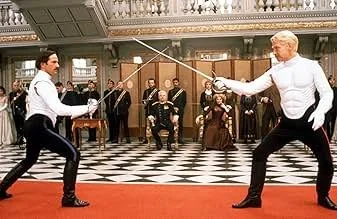
In productions, some Hamlets do actions “outside the text” that help Laertes change his mind. In the 1990 Zefferelli version of Hamlet (starring Mel Gibson), Gibson’s Hamlet is a playful prankster (something slightly set up by all Hamlet’s claims to have loved Yorick, the King’s jester, so much). During the fencing match, Gibson—for lack of a better word—“goofs” around. He acts like his longsword in round 2 is so heavy that he can’t lift it, he sneezes on Osric, makes silly “ha ha’s” as he leads Laertes to chase him around the fencing square, looks puzzled at Laertes’ rage in the timeout between rounds and even more puzzled when Laertes cuts him). In the 1996, Branagh film, Hamlet’s apology is profoundly sincere and hard to resist.
He Does the Deed Anyway
So between rounds 2 and 3 (out of the proposed 12!), Laertes says (to himself and possibly to Claudius) that he doesn’t really feel like killing Hamlet anymore. It is against his conscience.
And yet he does it anyway. In the Gibson film, Laertes does not say the line of future regret, but his face—after he cuts Gibson’s arm unfairly in a “time-out” between rounds (since he can’t get a hit in)—immediately registers regret.
Once Laertes has (to paraphrase Macbeth) “done the deed,” the spell of madness, revenge, treachery, and manipulation that has afflicted Laertes ever since the death of his father and sister seems to vanish. If Flannery O’Connor were here, she would tell us that Laertes would’ve been a good man, if he’d been able to treacherously poison the Prince of Denmark every day of his life. Committing treacherous murders (in that wonderful, Shakespearean way) brings out all the goodness, truth, and nobility out of Laertes.
He half-heartedly fights Hamlet (who is “incensed” by the cheating shedding of his blood) who cuts Laertes back. Now both young men are dying on the clock—but only one of them knows it.
When Laertes realizes that the jig is up, everything comes out. When asked by Osric how he is doing after being cut by Hamlet, Laertes responds, “Why, as a woodcock to mine own spring, Osric, / I am justly killed by my own treachery.”
This young man pronounces judgment on himself. He is (as he says) “justly” killed: “I deserve my ending.” He owns his action and takes full responsibility for his murderous ways (contrasting so sharply with cowardly Claudius). He confesses his deceit and tells Hamlet what foul play has been practiced upon him, ending with “the King, the King’s to blame!”
Recognizing that the time has come (and that “the readiness is all”) Hamlet famously “double-poisons” his uncle, the bloody usurper to the throne. And Laertes pronounces judgment on his partner-in-crime as well: “He is justly served; it is a poison tempered by himself.”
Those Last Lines Again
Laertes:
Exchange forgiveness with me, noble Hamlet.
Mine and my father’s death come not upon thee,
Nor thine on me. (dies)
Hamlet:
Heaven make thee free of it; I follow thee.
Maybe Laertes is just concerned about the fate of his immortal soul (as so many characters in Hamlet are) and that’s why he asks—and gives—Hamlet forgiveness. But Laertes does indeed seem to have had a complete change of heart. He calls Hamlet “noble.” He makes the first move and forgives Hamlet before he himself is forgiven. He forgives Hamlet for two deaths whereas Hamlet only has to forgive Laertes for one—his own. I am particularly fond of the request to “exchange” forgiveness because it implies a respectful, even ground. We have both wronged each other and owe something to each other.
Laertes dies requesting that Hamlet’s death not come upon his soul—and it is (cold) comfort to know that Laertes dies hearing Hamlet’s words: “Heaven make thee free of it.” Laertes dies being forgiven.
Forgiveness
This brief moment, when two dying young men—dying partly through their own fault and partly not (as it is in all great tragedies)—forgive each other moves me deeply, as all scenes of forgiveness do. Forgiveness is always unexpected, undeserved. You can’t believe it actually occurred.
Forgiveness requires one party to completely die to him or herself, for their right to justice and vengeance to be given up. It’s why Joseph had to run into another room and rips his garments and cry out when he had power over his slave-selling brothers and had all of Egypt’s power to destroy them. He had to die to himself and his right for justice. It’s why I break into tears when Ted Lasso tells his boss (who has set him up to be humiliated and fail) simply, “I forgive you.” It doesn’t make any earthly sense.
No doubt, Laertes was treacherous. No doubt, Hamlet deserved death as well for his killing of Polonius and abominable treatment of Ophelia (Hamlet himself, standing over Polonius still-warm body, says, “I will answer well the death I gave him.”)
They are both partly responsible, but God, they are so young. They are also the victims of corrupted old men in a usurping regime. That mix between responsibility and victimization is exactly where I think all great tragedy lies.
And even though the play is titled after the “sweet prince” Hamlet[9], I cannot get over the beautiful, sudden nobility of Laertes in the end. How Shakespeare got him from murderous deceit to heavenly forgiveness will always be a wonder to me.
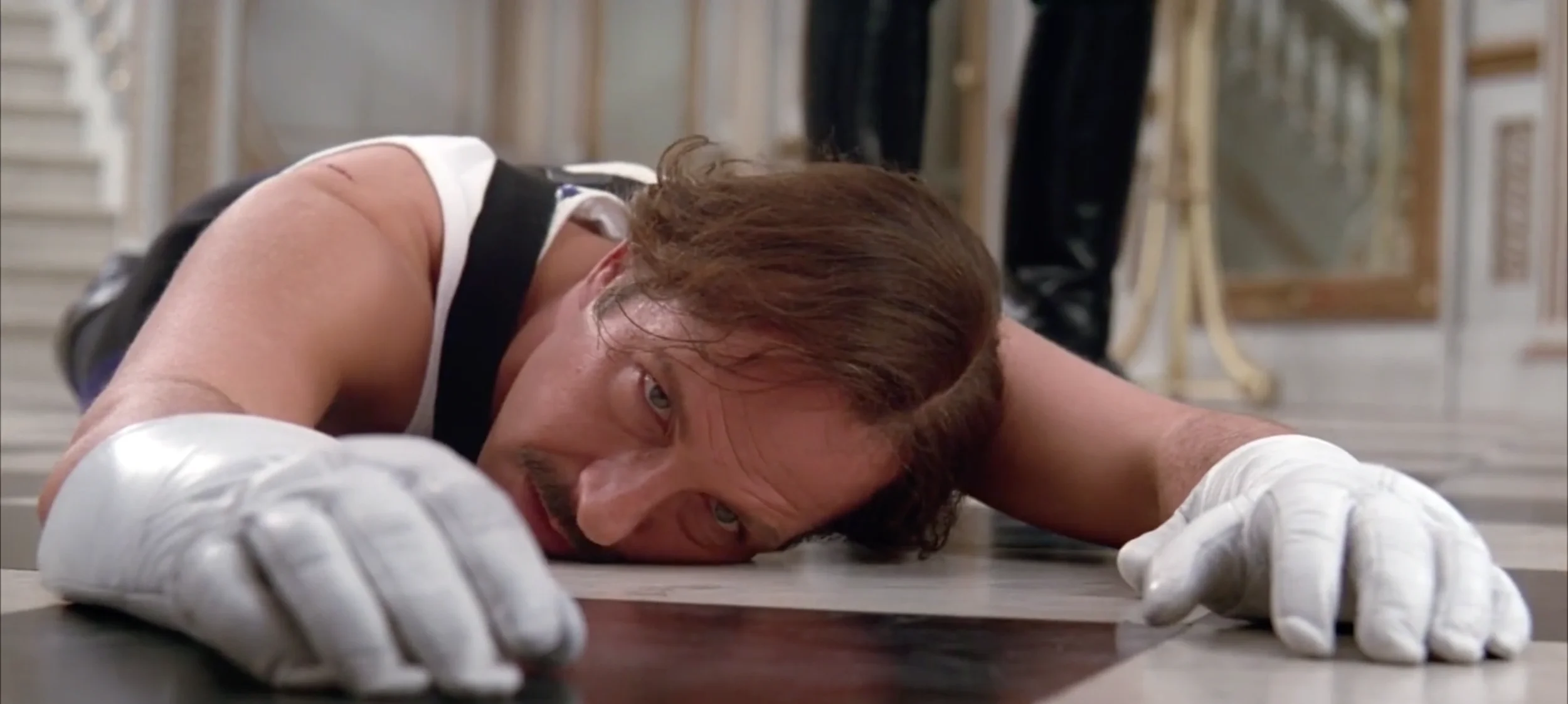
[1] These lines are particularly done well by Michael Maloney in Kenneth Branagh’s 1996 film, Hamlet. Maloney’s Laertes is lying on his presumably broken-back on the castle floor (he’d just fallen off the balcony in his swordfight with Hamlet), filled with grief at his treachery. Maloney arms are up above his head, and as he says these lines, his turns his right hand upward and opens it toward Hamlet beseechingly.
[2] As Hamlet says in their fencing match in Act 5.2: “I’ll be your foil, Laertes.”
[3] The Branagh film has Laertes standing along at the misty grave (who has a funeral at night?) disheveled, puzzled, and heart-struck at everything that just went down in less than five minutes.
[4] Though he does know—just by looking at the procession—that it has “maimed rites” that indicate the corpse they follow is a suicide and that whomever is dead “’twas of some estate” since the procession is impressive containing the King, Queen, and courtiers.
[5] Hamlet claims he’ll pile MORE dirt on him and Ophelia buried together than Laertes claimed he would. Laertes wanted the gravediggers to make the mound as high as Mt. Ossa. Hamlet wants so much dirt as to make Mt. Ossa “a wart.” Eyeroll.
[6] Usually when Hamlet asks this question, I feel compelled to answer for Laertes: “He uses you thus because you killed his father and drove his sister mad, causing me to lose the two people I loved most in the world without you suffering any significant punishment. Have you not been paying attention to the play?”
[7] Indeed, Michael Maloney looks completely puzzled (“gobsmacked” might be the better word) when Hamlet delivers these lines. Possibly—at least in Branagh’s Hamlet—this is the first little bit of change in Laertes’ mind: “Hamlet seems to like me and doesn’t know why I’m so angry at him. Is he that dumb? Or is there something I don’t know about my father’s murder and my sister’s madness?”
[8] I, for one, have always found the metaphor of the “arrow shot over the house” a convincing one. Hamlet did indeed do something similarly stupid—stabbing a curtain without checking to see what (or who) was behind that curtain. Definitely manslaughter.
[9] Another time, another essay. . .