come celebrate with me . . .
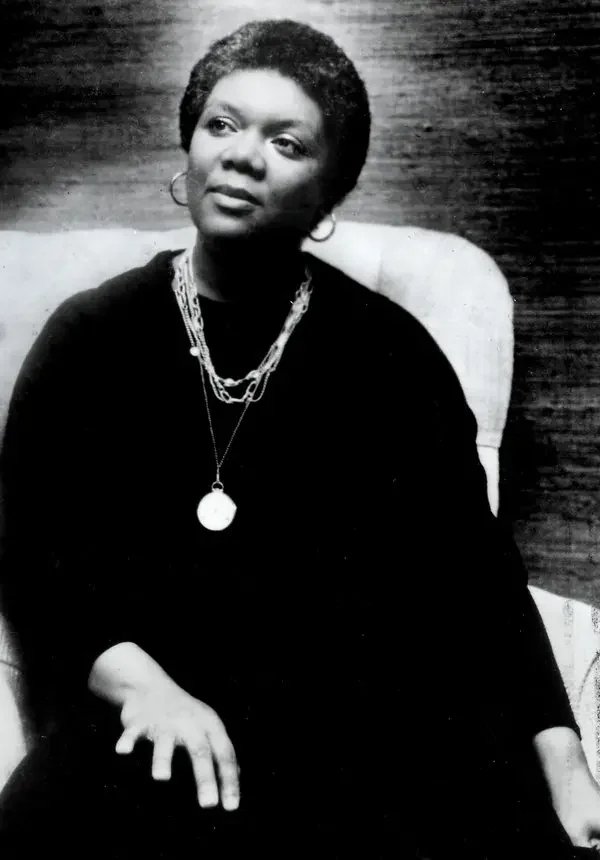
When I was an English major undergrad at Furman University, I went to Burgiss Lounge one evening to hear a young lady invited to campus to read her poetry. I, sadly, do not remember the woman’s name or much of her poetry, but I definitely remember what happened at the end of her reading
“Whenever I finish reading my own poems,” she said, “I like to recite poems by poets I love—and one poet I love in particular is Lucille Clifton.”
It was the first time I heard her name.
Then, the young lady proceeded to recite Clifton’s iconic poem, “won’t you celebrate with me,” and my world changed.
I didn’t catch everything about the poem on a first listen, but the ending lines filled up my hurting heart:
come celebrate
with me that every day
something has tried to kill me
and has failed
The lines electrified me, and that evening I went to the Furman library and looked up all of Clifton’s books. I checked them all out: Good Times, Good News about the Earth, Quilting—and, my favorite title, The Book of Light.
I sat down with the poem that had moved me so deeply and learned more about Clifton herself and her poetic calling.
The poem “won’t you celebrate with me” is about Clifton’s struggle to survive and thrive as a Black woman in America when she grew up in a time (to paraphrase Ralph Ellison’s Invisible Man) when “white was [the only] right.” She writes poems about drinking out of Shirley Temple cups and wanting to have her white skin and curly hair.
In the poem, Clifton describes herself as “born in babylon”—born into a nation holding her in captivity—and as “both nonwhite and woman” with two strikes against her from the start.
But, as the poem states, Clifton did not let these disadvantages, these discriminations stop her from fashioning her own self—even if she “had no role model.”
Clifton “made it up.” She formed her identity “on this bridge between starshine and clay”—and she first asks us to celebrate that identity with us and then finally commands us to do so.
The poem is a powerful affirmation of self-worth and--even though I was very different in demographics from Clifton--I needed to hear those words at that exact time in my life.
Those last lines frankly acknowledge the sad truth that “every day” something tries to kill us. What tries to kill me and my students may be different (or similar) what tried to kill Clifton, but the fact of the matter is that the killer fails—or, at least fails today.
This poem—along with other great works of literature—became talismanic for me both as a human being and as a teacher.
So many things try to kill each one of us every single day. So many of us have trouble just being who we are if we don’t fit what society deems acceptable or normal. So many of us have to work to shape ourselves into the unique person God has made us to be. Clifton’s poem shows us the way to survive in our native land—and thrive too.