The Question Minus the Answer
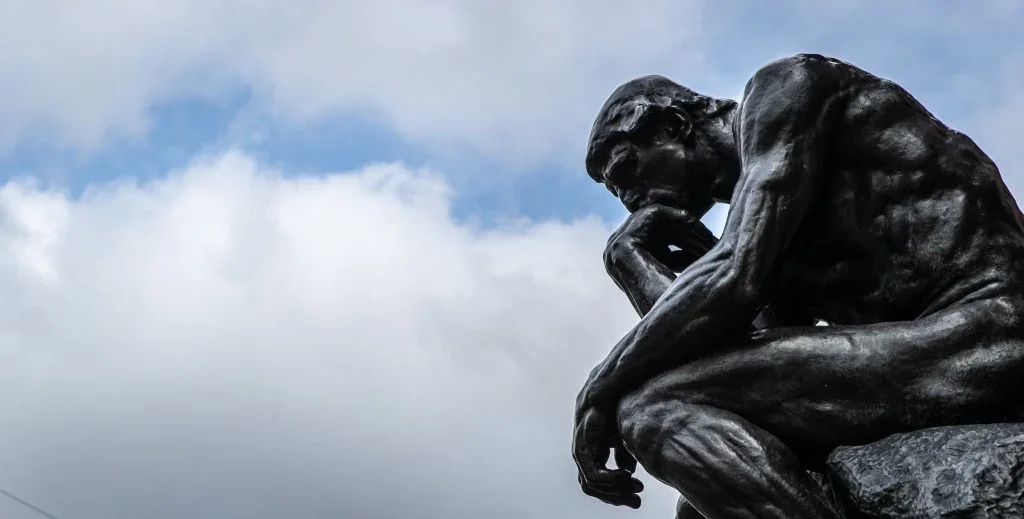
The AP English Literature Exam’s May 2004 Open question quoted Roland Barthes defining “Literature” as “the question minus the answer.”
Ever since I read that quotation, I’ve been slowly transforming my class curriculum to reflect Barthes’ idea (which is mostly true--although some literature is more than happy to provide you with an answer).
I think part of my job as an English teacher is to help students unearth the question that is often hidden inside powerful literary texts. And once the question has been unearthed, it’s our job to help students wrestle authentically with that question.
For me, it often takes a long time to articulate that question perfectly (or as close to perfect as I can get). I usually joke that it takes three years of teaching a text before you really know “how” to teach it effectively and efficiently (translation: teach it in a fun, challenging, and yet accessible way that avoids tedium). And, of course, it is true that sometimes great literary texts can ask several different questions, and the teacher (with student input and response) can choose among those many questions which one the class would like to focus on for discussion.
When I’m teaching James Joyce’s short story “Eveline” (from Dubliners), for example, we might ask (as a class) any of the following questions:
1. What do we owe to others—especially our family?
2. What do owe to ourselves?
3. How do we know when what we owe to others outweighs what we owe to ourselves (or vice-versa)?
4. How do we know when a risk is worth taking?
5. Is the devil you know truly better than the devil you don’t? (Or is a bird in the hand always worth more than two in the bush?)
6. And since it’s the very Irish Catholic “Eveline,” how does God feel about our obligations to others and ourselves when they are in conflict?
The more questions you ask, the more powerful the story becomes. In one class in which we were discussing “Eveline,” I kept amping up the questions the story asks us to consider when a young lady raised her hand and said, “Mr. Thompson, if you keep talking about the pressures Eveline is dealing with anymore, I’m going to break out into hives.”
Oddly, I call this type of moment “success.”[1]
The most important point I’m trying to make here is that the answer the question is not really in the text; it’s in the reader (if he or she chooses to engage seriously with the text). We have to find out the answer for ourselves either through introspective thinking or dialogue with others.
This ability of literature to cause us to make wild surmises about what we think about our life in our world is why I believe that literature (contrary to popular opinion) is profoundly not boring. It takes work, though—and buy-in from the student—and a teacher who can help students see that the literary text is asking them a really big question.
At least one part of my whole website endeavor here will be talking about what Big Questions different literary texts get us to ask that are beyond the purely academic.
[1] In a strange way, I’m trying to invoke an existential crisis in my students every single day. It’s perverse.