Chekhov: Life is Not a Genre
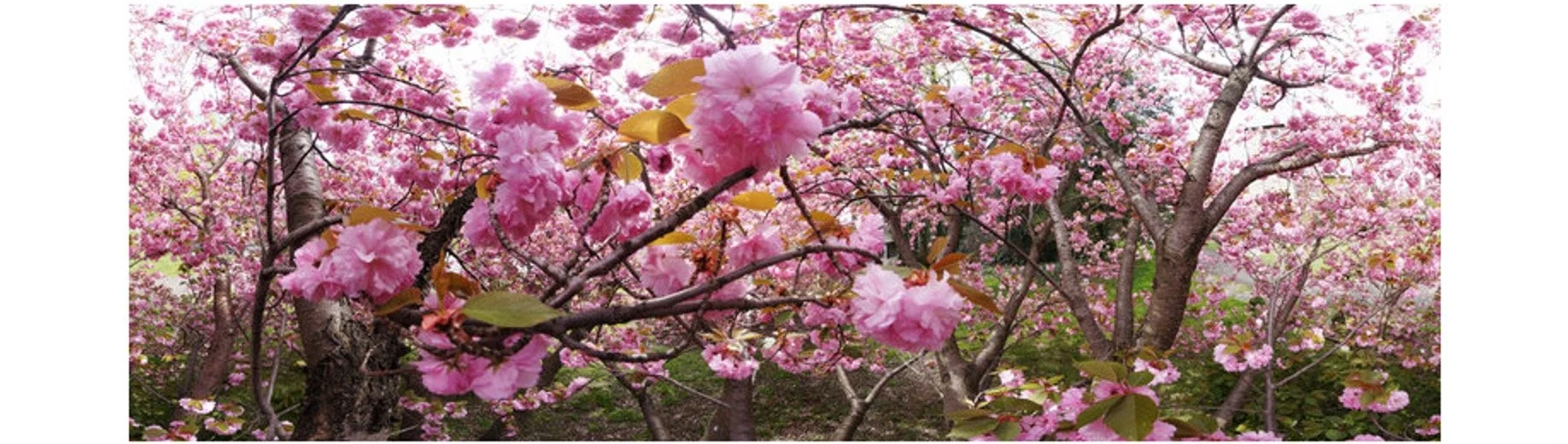
Chekov—rather confusingly—subtitled his play The Cherry Orchard[1] a “Comedy in Four Acts.” Some performances and directors ignore this generic identification completely and make the play full of “crybabies” walking a long, tedious slog to despair. Chekhov, one critic wrote, does nothing in any of his works, but steadily kill his characters’ dreams.
Other performances and directors take Chekhov’s subtitle too seriously and turn all of the characters into stereotypical farcical clowns. My son, breaking my heart into a thousand pieces, told me the play was “a sitcom”—like an episode of Seinfeld, with every character being comically static and even having catch-phrases like Simpsons’ characters.[2]
So why did Chekhov call his last play, “a comedy”?
The play’s action is certainly sad. 150 year old spoiler alert: Madame Ranevskaya and her brother Leonid Gayev are not able the save the orchard from being sold and chopped down. Everyone arrives in Act 1 to save the orchard (greeting each other and reuniting with so many merry meetings), and in Act 4, almost everyone departs with “lachrymose” goodbyes.
A “comedy” should be funny, right? Or a comedy—like, say, Dante’s Divine Comedy—should end happily with a vision of God (or something).
Well, Chekhov’s play is funny (if done in line with Chekhov’s vision). The characters are indeed (as my son said) comically static. They don’t seem to be able to fix their flaws or grow from their mistakes. In Act 4 of Chekhov’s great play, Uncle Vanya, Vanya hilariously says that “everything will be just as it was before” and no one’s practical circumstances from Act 1 changes at all. In Act 4 of Orchard, Madame Ranevskaya returns to whence she came from (Paris) and to her “barbarian” lover who abuses her. No one ever accused a Chekhov character of growth.
The characters are funny as well in almost slapstick ways. For example, Yepikhodov’s boots squeak.[3] He’s pathetically lovelorn toward indifferent Dunyasha. He talks weirdly. He’s always getting into trouble and breaking things—even though he tries to act like a dignified gentleman. He wakes up with spiders on his chest, he drinks kvas and finds a cockroach in it. In Act 4, his voice gets all croaky because he “swallowed something in the glass.” The mocking characters call him “the Walking Accident” and “Two-and-Twenty Troubles.”
And yet . . . and yet . . .
Yepikhodov is not just a clown. He loves Dunyasha; he’s proposed to her. He spends most of the play longing for her like a lost puppy. Chekhov even dares to make a semi-joke out of his despair by having him carry around a revolver “just in case” he decides to end his life over his unrequited love.
If Orchard is a comedy, it’s one that’s running backwards. His comedy does the exact opposite of what it should do—it begins comically and then progressively becomes sad. Even some catch-phrases—in the words of one of my students—become tragic and reveal “they were tragic all along.” This is funny?
Honestly, I think that when Chekhov called Orchard a “comedy,” I think he meant tragicomedy. He only wrote “comedy” because he had seen his prior plays turned into weepy soap operas, and he wanted to emphasize in this final masterpiece that his vision of humanity was not primarily tragic. And honestly, anyone who looks at all of Chekhov’s works—short stories and plays—can see that the man was always being funny and tragic at the same time. This quality is the essence of his genius.
Chekhov’s insistence on Orchard being comic reminds me of something my favorite undergraduate professor said in class one time: “Life is not a genre; it’s a confusion of genres.”
I believe that all genres “tell the truth”—but none of them tell the whole truth. Tragedy gives us the bad news about ourselves and our lives, but not all of life is sad. Comedies and fairy tales give us the good news about ourselves, though we have to pretend that the bad news of tragedy doesn’t exist in order to truly hear it.
No work of art can tell the whole truth, but a few authors—like Chekhov and Beckett—come pretty dang close. They give us a wide, capacious views of humanity (noble virtues, selfless acts, craven cowardice, comical foibles) all at once.
Perhaps it’s because my view of life is tragicomic (formed by all the literature I’ve read, no doubt) that I find Chekhov to be the most wonderful and true portrayal of what life is like onstage.
Life is not a genre, but if it were one—it’d be a tragicomedy, I think.
[1] My very favorite play in the world and the occasion of the greatest theatrical experience of my life.
[2] He’s not totally wrong about the catchphrases, though.
[3] This was probably the first Chekhov joke I ever saw live, and I still laugh remembering it.