The First Job of Literature
The first job of literature is to please. I have to remind my students of truth again and again. They often believe that the first job of literature is either to bore them or frustrate them, but no—I tell them again and again—the first job of literature is to please.
George Saunders expresses this idea well in his superb book A Swim in a Pond in the Rain. Saunders basically has the theory that the author must keep the reader reading, must keep the words coming and the pages turning. The only way to do that is to keep the reader’s interest. Everything, says Saunders, must serve the heart of the story. Everything must either “be entertaining in and of itself” or must “advance the plot in a non-trivial way.”[1]
If a piece of literature is not pleasing, then it’s not going to go very far with the reader. So where then do students get the idea that literature is here to torture them?
Well, probably (and sadly) from their English teachers.
Billy Collins shows us the typical reaction to poetry in his wonderful poem, “Introduction to Poetry.” The poem’s title likely refers to a class that Collins may have taught (or imagined teaching) where his job was to introduce students to poetry. Like any good reader or poet, he wants the students to enjoy, love, (or at least) appreciate the poem. He wants them to “waterski / across the surface of a poem / waving to the author’s name on the shore.” In other words, he wants them to have a good time.
But years of being in an English classroom where the teacher leads students every day on the Great Symbol Hunt have conditioned the students to do something else entirely: “But all they want to do / is tie the poem to a chair with rope / and torture a confession out of it. / They being beating it with hose / to find out what it really means.”
I mean, it’s our own fault that students think that way. And, to be fair, a lot of literature—and poetry, especially--is “riddle-like”; it feels like a puzzle you can’t solve.
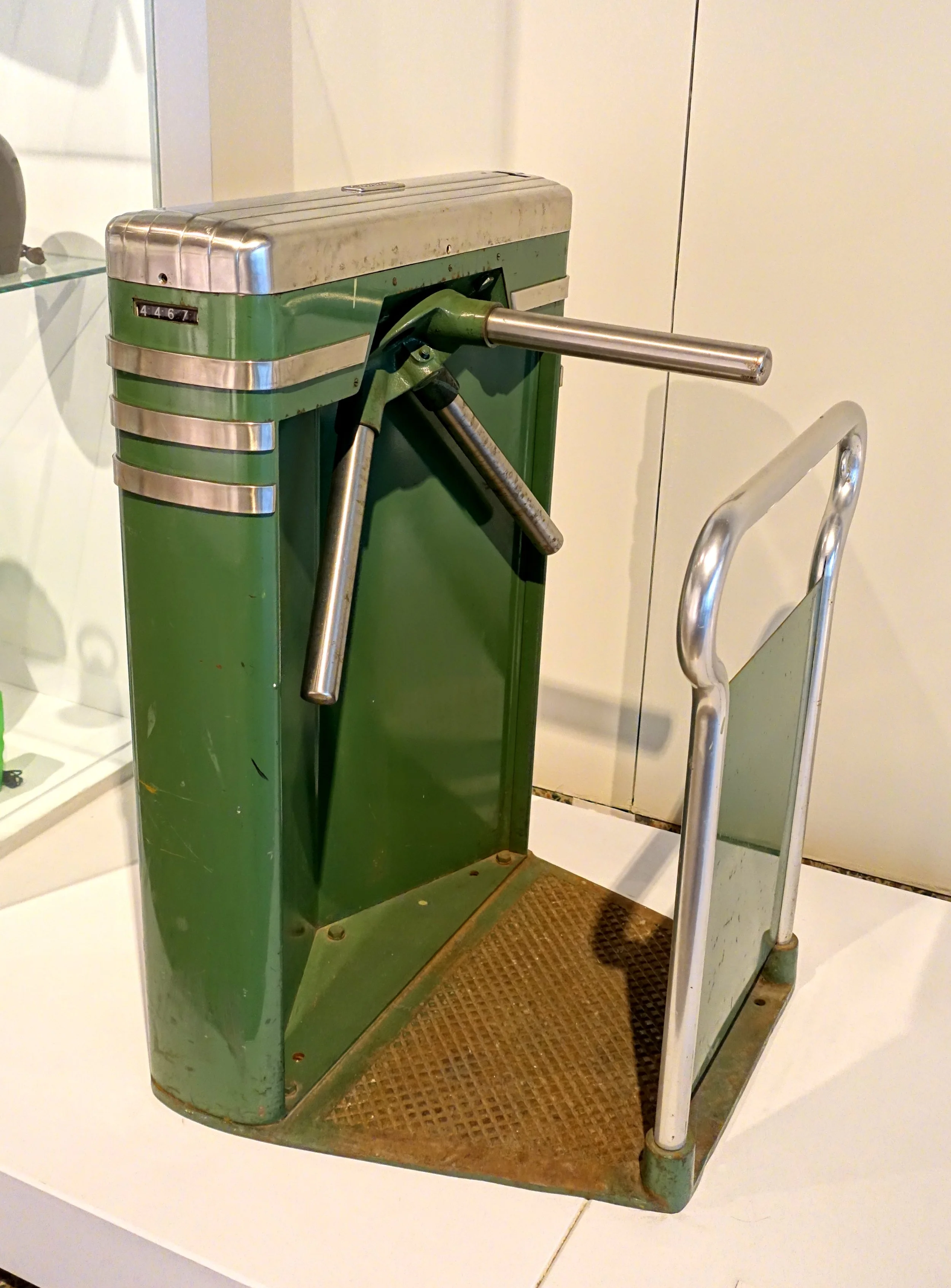
Collins gives us another helpful analogy, though, that I try to convey to my students about the joy of literature: the iron turnstile.
In his delightful poem, “Reading an Anthology of Chinese Poems of the Sung Dynasty, I Pause to Admire the Length and Clarity of Their Titles,” Collins is really taking a swipe at deliberately reader-unfriendly modern poems with titles like “Vortex on a String” or “The Horn of Neurosis.”[2] He compares these titles to the “friendly” titles of the Sung Dynasty like “On a Boat, Awake at Night.” He says modern poem titles are like “confusingly inscribed” welcome mats—or “iron turnstiles.”
The iron turnstile image hit home for me instantly. If you want to ride the roller coaster at Six Flags or Disney World, there always seems to be a part near the end of the long, hot line where you push through an iron turnstile. (I assume the iron turnstile is simply noting how many people rode the Georgia Cyclone today).
In other words, there’s a threshold of effort that must be given or passed through in order to get to the fun stuff. Sometimes, using a less unique metaphor, I compare reading to riding a bicycle.
When my son was very young, he resisted learning to ride a bicycle with no training wheels. Partly, I think, he was scared to fall—and he was comfortable riding with his training wheels—but he also seemed to think that riding a bicycle was too much work.
And it is. Riding a bike is work before it is fun[3]. The same is true of reading. You have to put in effort before the pleasure begins. You have to set aside time, suspend your disbelief, and actually think while you’re reading.
But the first job of literature is to please. If you do all the work, and the literature is still not pleasing, either the work is indeed not doing its job, or we’re not putting in enough effort, or we are putting effort in the wrong direction or in the wrong manner. Maybe we’re just not asking the right questions or having the right expectations. In many works of literature, the author teaches us how to read the work as we go. But that takes a lot of effort on our part. Maybe the effort will pay off, maybe not. We never know. You pays your money, and you takes your chance.
But when it’s all over, the work of literature better have been a pleasure to read. Otherwise, I don’t think we ought to call it literature.
One of my favorite student comments ever came from a wonderful young lady reading Joseph Conrad’s Heart of Darkness—an iron turnstile work of literature if there ever was one. I’d assigned the class to read Part 1, and this student did the job earnestly.
Then, when I opened up the class discussion, she raised her hand and said—in all sincerity—“Mr. Thompson, I just want to know what’s wrong with me that I’m not appreciating this work of art . . . because I definitely am not.”
Her comment cracked me up because what kind of teenager finds fault in themselves rather than in the work of literature itself? A truly generous one, for sure.
This student was dealing with the iron turnstile. The work of literature was work before it was pleasure (even if a horrific pleasure like Heart of Darkness definitely is). I discovered over many years of teaching the novella that the very things the students complained about in the book were the very things that made the book amazing: its dense, dreamlike psychological prose, its horrifying ambiguity, and its frustrating digressions.
Teaching Heart of Darkness taught me that often the first complaints about a work of literature are actually the key to appreciating it. I find out what the students dislike or find frustrating—and it ends up, it’s often the style of the book itself (which, if it’s a great work of literature, is often off-putting in its originality) that is teaching the students to read and appreciate it.
If we’re dealing with great art, then the iron turnstile is inevitable. If you want to take the ride, you’ve got to put in some effort. The greater the art, the greater the effort (probably)—but also, ah ha ha, if we can do it—the greater the pay-off.
That’s my theory at least.
[1] To which I’d add “or advance the characterization, setting, or theme” in a non-trivial way.
[2] There’s a lot of great “modern” poetry out there, but he has a point—even if an extreme one.
[3] True of so many things.